


Milan Neralić

Autor: Petra Husain Pustaj
From Lush Nature in Slunj to Global Metropolises
The versatile athlete, sports pedagogue and fencer Milan Neralić was born in Slunj on 26 February 1875. From his early youth, he found fun in sports activities, among which exercises on rings, parallel bars and high bar, and weight lifting were his favourite ones. He often spent time in nature, swam in the Korana River and practised diving and double somersaults at its waterfalls. He particularly enjoyed hiking, and, as it turned out later on, hunting venomous snakes was good practice for reflexes, which were extremely important for his “fencing tempo in attack and defence”.

Several names that refer to Milan Neralić are found in historical documents and sources. He was called Mihajlo for a certain period of time, which comes from German Michael. He is found under the name of Mile in the application documents for the Royal Boys’ School. Among several different signatures, Milan Neralić was chosen as his legitimate name, as this is how he signed his name as a jury member at the Fencing Academy in Zrenjanin (formerly called Veliki Bečkerek) in 1904.
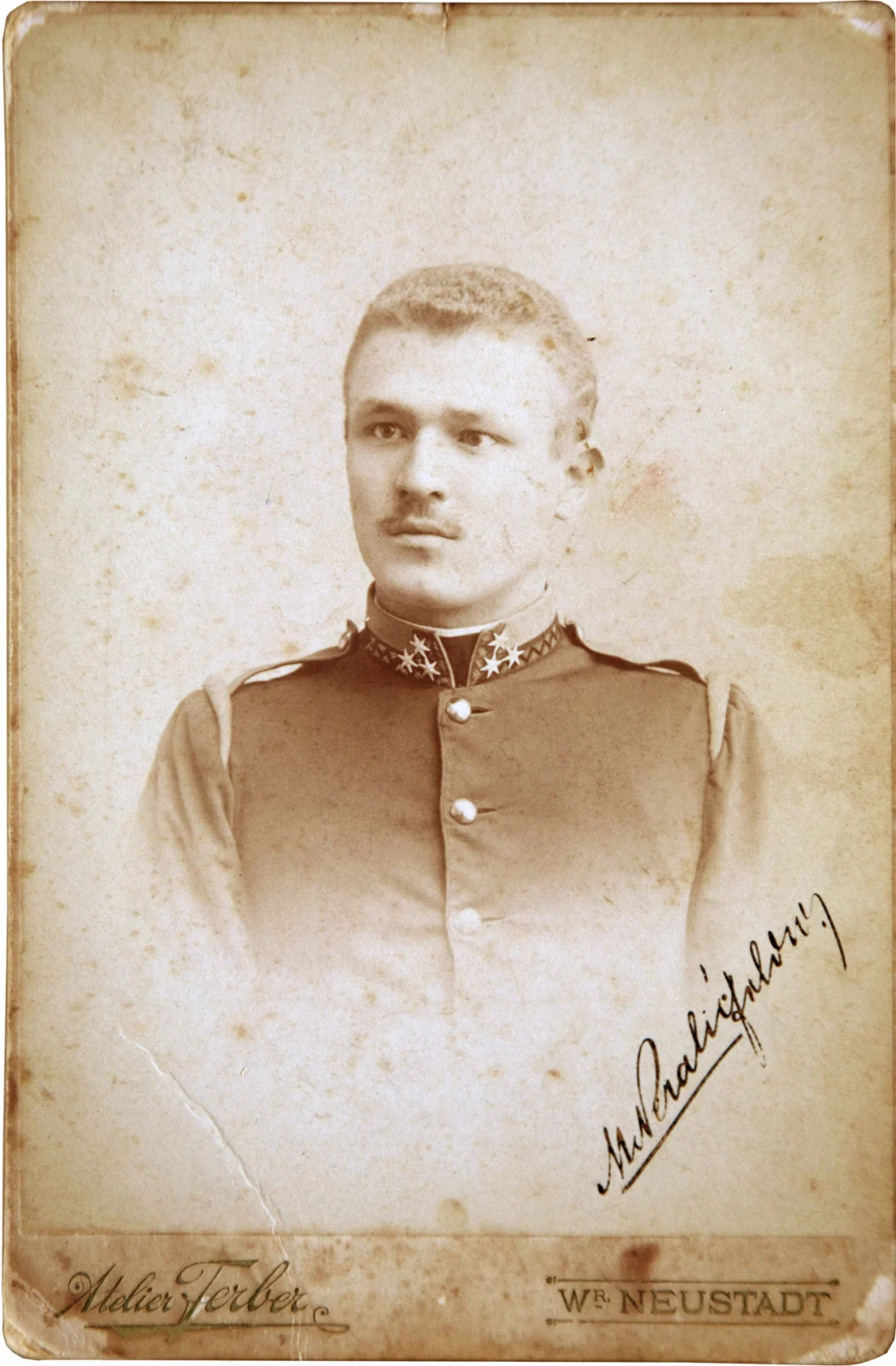
Milan Neralić, Atelier Ferber, around 1901 (HŠPOM-FT006820)
He completed primary and four-year public school in Slunj (1882-1890). He continued his education at the Royal Boys’ School in Petrinja, where he completed only two years. As he was forbidden to continue his education due to his bad behaviour, he went to Karlovac, where he joined the army. He first encountered fencing there, at the Officers and Non-Commissioned Officers Fencing Academy. In 1895, he went to the Military Fencing and Gymnastics Teacher Institute in Wiener Neustadt. His true love of fencing was manifested in his persistence to enrol in and complete the course. At enrolment, a rigorous selection process was carried out, during which Neralić was rejected, so he was tested again after a request addressed to the commander. He took the opportunity and studied and trained conscientiously and with dedication, training in every free moment. In 1898, he completed the Military Fencing and Gymnastics Teacher Course with flying colours and stayed to work there as an assistant fencing master, and from 1901, as the head fencing master. During his stay in Wiener Neustadt and Vienna, he taught at the Theresian Military Academy and the Vienna’s Union-Fechtklub during two periods: from 1898 to 1908 and then again from 1914 to 1917. After leaving the army, he moved to Berlin (1908-1914), where he continued to teach the skills and knowledge he had acquired in epee, sabre and foil fencing in civilian and military clubs: the Central Physical Exercise Institute, the German-Italian Fencing Club, the Officers’ Fencing and Riding Club, the Military Technical Academy, the Home Guard Officers Casino Fencing Hall and the Neralić Fencing Hall.
On the Road to Achievement

Milan Neralić with the son of Hans Murero during practice, around 1911 (HŠPOM-30264)
Dedicated work and perseverance secured Neralić a place among the world’s best fencers. He achieved notable results at military tournaments and fencing academies organized in the Austro-Hungarian Monarchy and abroad as early as 1898. One of his most significant successes was certainly the one at the 1900 Olympic Games in Paris, when he won the bronze medal in the professional fencing masters’ sabre event. This made him go down in history as the first Croat to compete at the Olympic Games and win an Olympic medal. This was followed by victories and significant results at tournaments in Milan (1906), Frankfurt am Main (1910) and Turin (1911).
The list of his appearances is long and only partly registered. Milivoj Radović deserves great credit for this: he visited the archives and people from Neralić’s life with devotion and patience, and collected most of his appearances with results based on that. Neralić also had a significant number of appearances as a referee, jury member or organizer.
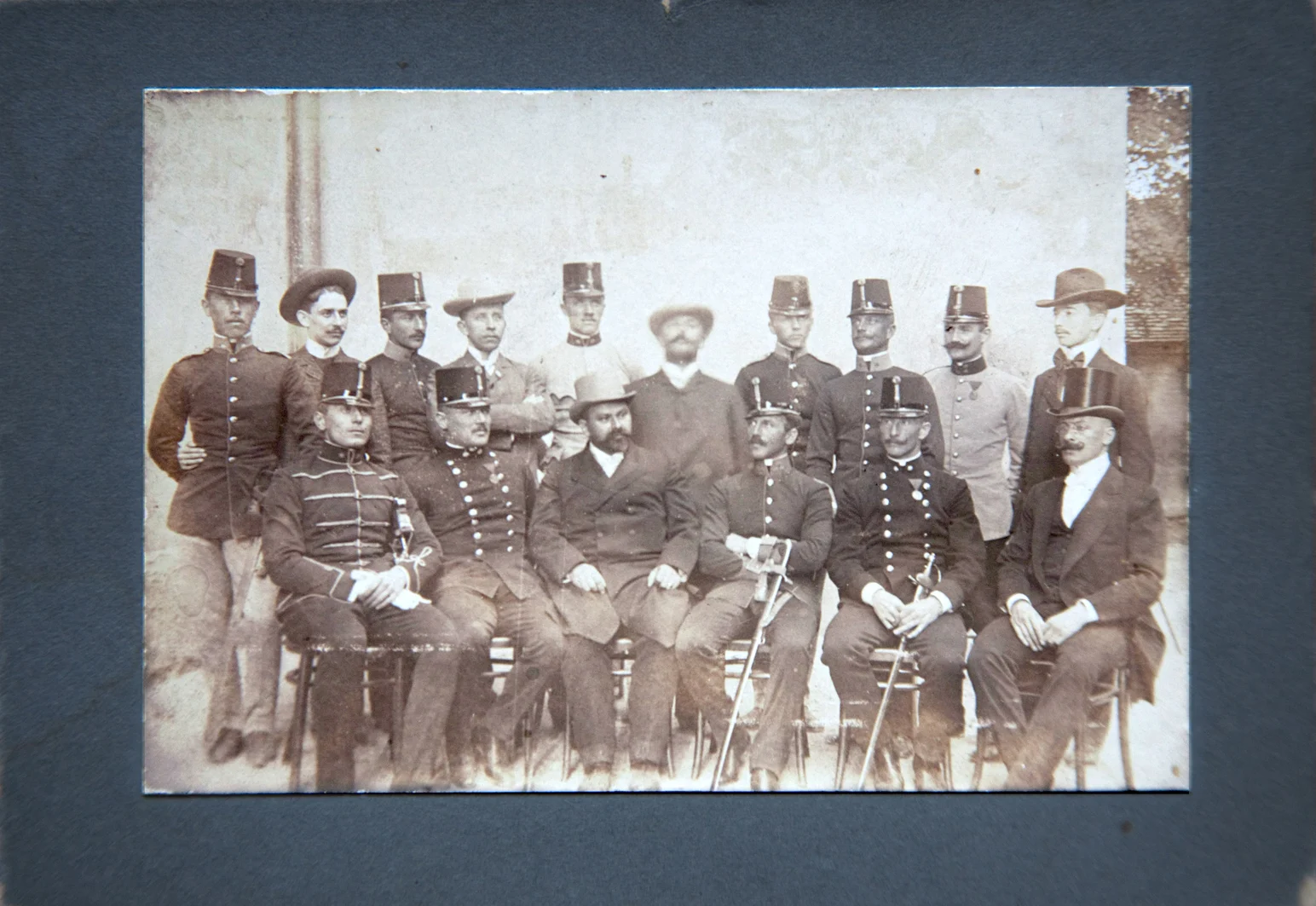
Fencing Academy in Zagreb, 1905 (HŠPOM-FT006505)
As a competitor, he participated in fencing academies in Zagreb (1902 and 1905) and he helped organize the appearances of the best fencing teachers, such as Giovanni Franceschinis and first lieutenants Rudolf Möbius and Emil Schischek.
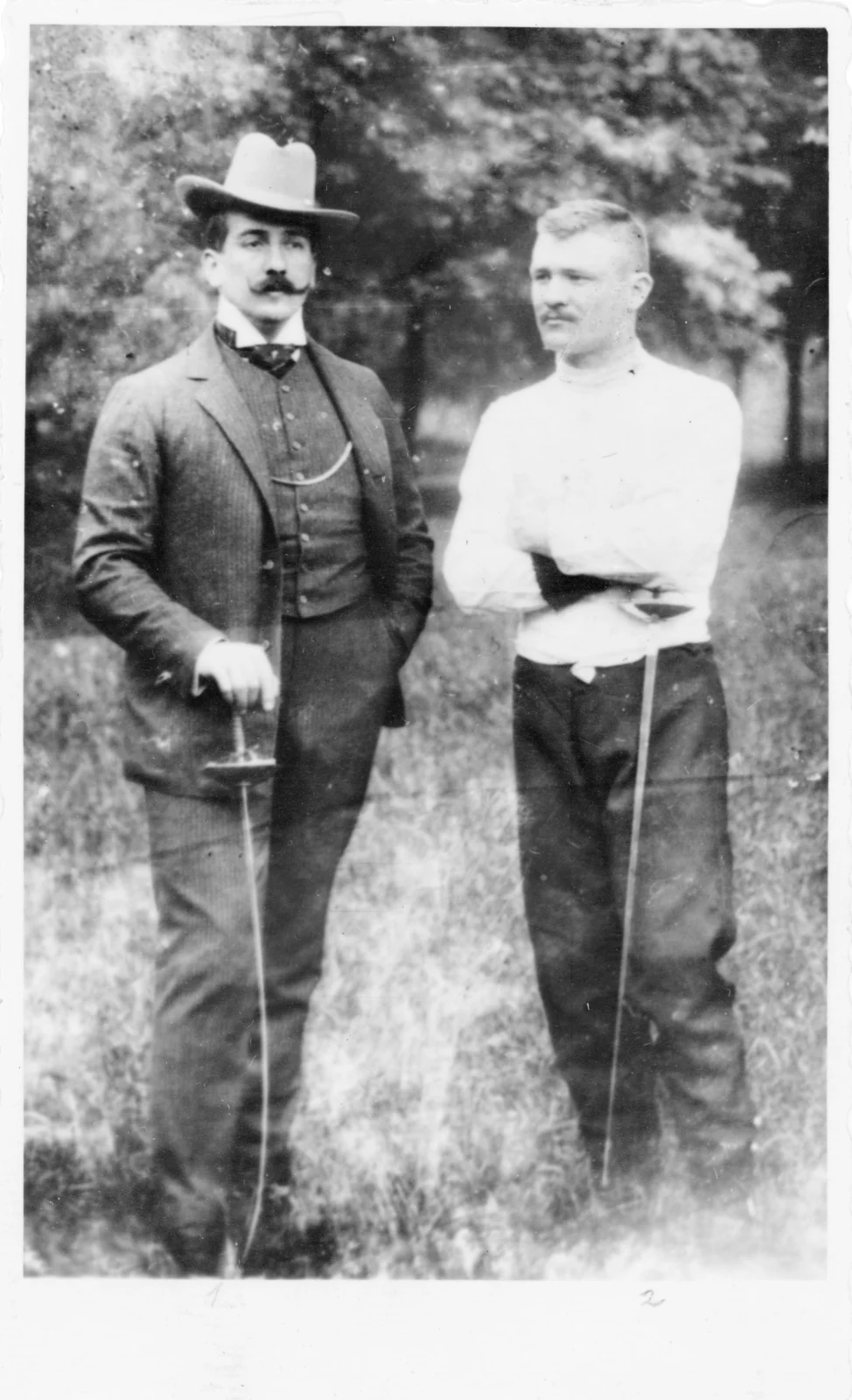
Milan Neralić and Giovanni Franceschinis, early 20th century (HŠPOM-30256)
With his wife Wilhelmina Preis, whom he married in 1911, he organized a fencing academy in his hometown of Slunj in 1912. Micika, as he fondly called her, was a professional fencing teacher for 56 years (until 1962). She was the only fencing teacher to her niece Ellen Preis, many-time Austrian champion, who still holds the status of one of the most successful female fencers of all time.
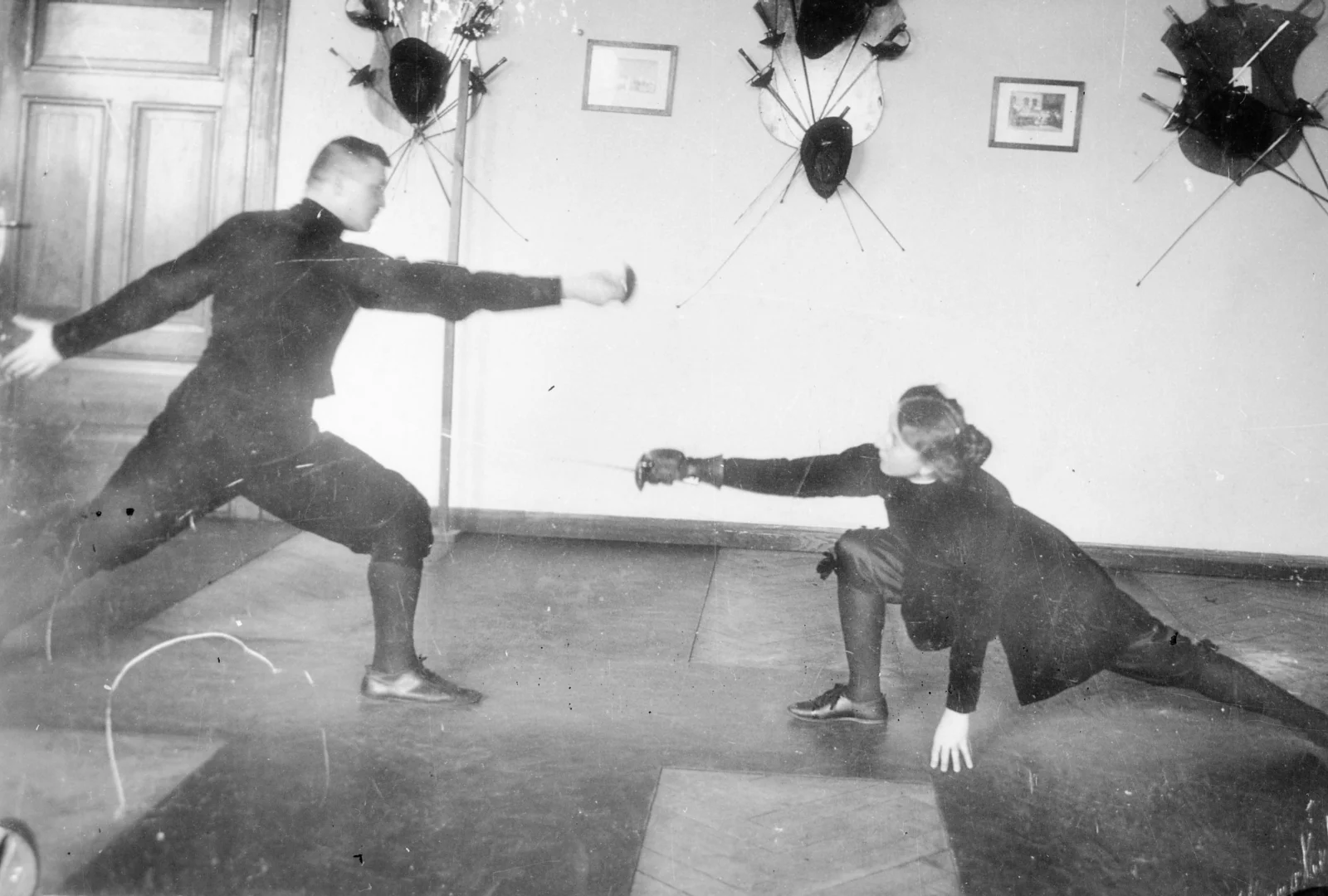
Milan and Wilhelmina Neralić, around 1911. (HŠPOM-30259)
Fencing Phenomenon
Neralić, a professional fencing teacher, competed against professionals and had excellent command of epee, foil and sabre, with which he achieved the best results. His fencing lessons were followed with great interest. Both theoretical and practical parts of his classes were followed with equal attention. He could rise to any challenge, and his insightfulness helped him in the approach to those students who were not inclined to master tasks. During his fruitful career, Milan Neralić distinguished himself as a successful and resourceful fighter and an excellent coach whose eye could not miss anything. He coached several decorated Austrian and German fencing masters, and many officers and non-commissioned officers from Croatia also learned fencing from him. He is the innovator of one of the basic moves in fencing – the flying lunge (shut), i.e. the swift thrust into the opponent from a high jump, and for a long time, he was the only one who performed it. His hits were so fast that, during practice, he used to announce to his opponent where he was going to hit.
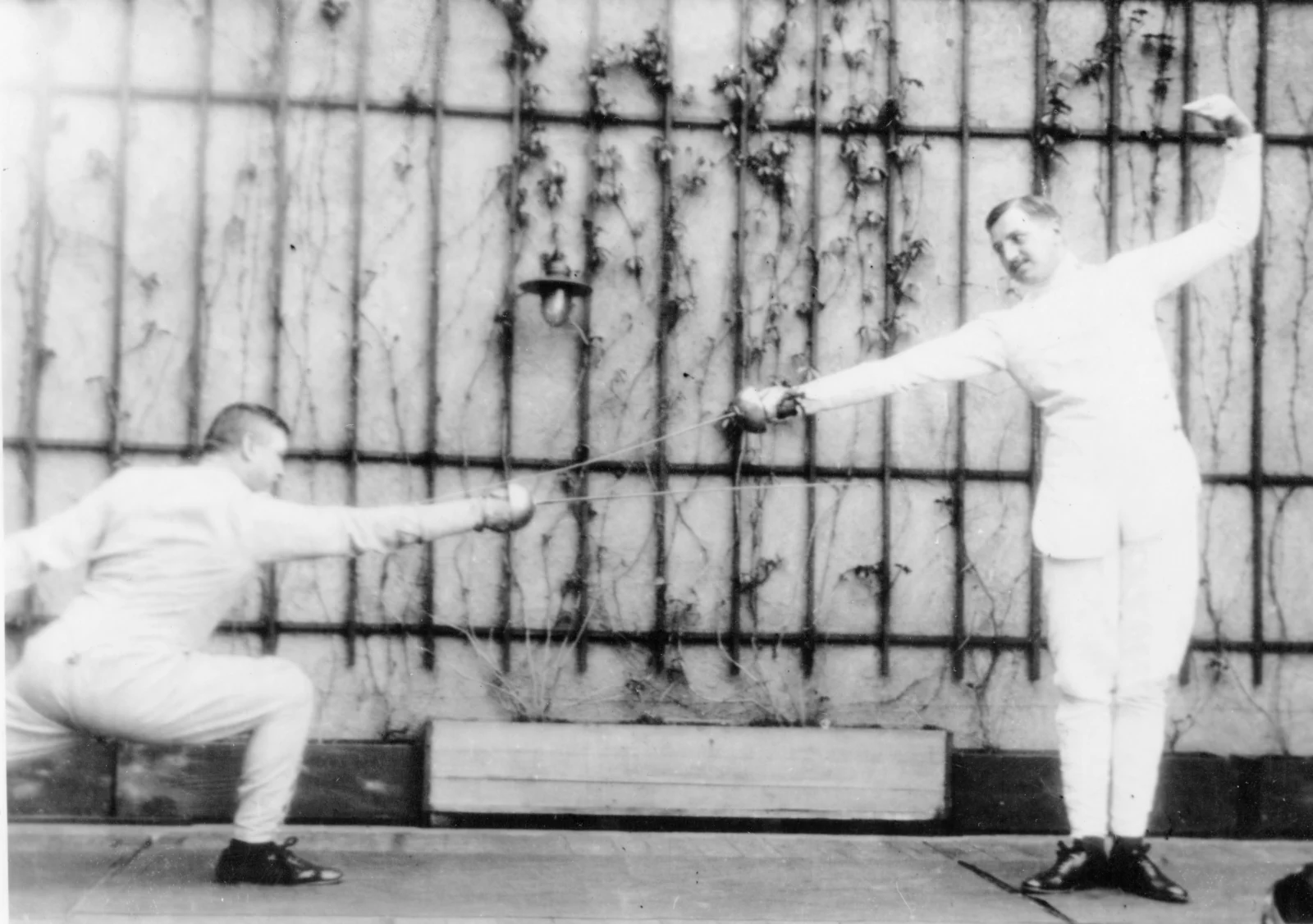
Milan Neralić and Count Shaffenberg, around 1911. (HŠPOM-30257)
The most famous word of mouth story about his ingenuity is undoubtedly the one when he fenced against a mirror. In an effort to learn the weaknesses of the French left-handed fencing master Alphonse Kirchhofer, Neralić fenced in front of a mirror and discovered what kind of hits he could deliver to his opponent. The bout against Kirchhofer presented an opportunity for Neralić to prove that he belonged to the very top of the world’s fencing. Although he did not win the bout, he delivered the first hit to his opponent, which was also the first one on the tour (the Netherlands, Germany, Austria in 1904), which was considered a special honour and success.

Milan Neralić, Prince Friedrich Karl of Prussia, Captan Reichenau, Hans Murero. Officers´ Pentahatlon, fencing competititon, June 6th to 8th 1914 (HŠPOM-30248)
Neralić did not forget his hometown after he went abroad. He often went back there, and it is recorded that he once said that he “prefers Slunj’s lush nature to their castles and greenhouses with palm trees.” This was in response to the letters he often received from foreign dignitaries who would invite him to join them in the hunt. Instead, he and his wife often and gladly participated in parties organized in Plitvice, Lešić, Slunj and other places in the Kordun region by the Lovor Singing Society, which had been founded in Slunj back in 1876. His wife Micika played the mandolin, and Neralić also taught her some Croatian songs, of which My Dear, My Dear, Where Were You Last Night (Mila moja, mila moja, gdje si sinoć bila) was his favourite.
Rich Heritage as a Legacy

Milan Neralić died in Vienna on 17 February 1918 and was buried at the Central City Cemetery. We remember him as a world-class athlete who made his homeland famous abroad with his work and skills.
He is the author of the book Introduction to Fencing (1914) and, as part of his legacy, the Milan Neralić Cup fencing tournament has been held in his memory in Karlovac since 2013.
In March 2019, the Croatian Olympic Committee established the Milan Neralić Award “for exceptional contribution to the development of sports at the local level in the field of scientific, professional and/or pedagogical work, and the encouragement of physical and health culture of children and youth or sports and recreational activities of local residents .“
Milan Neralić has had a statue erected in his honor in his home town of Slunj in 2022.
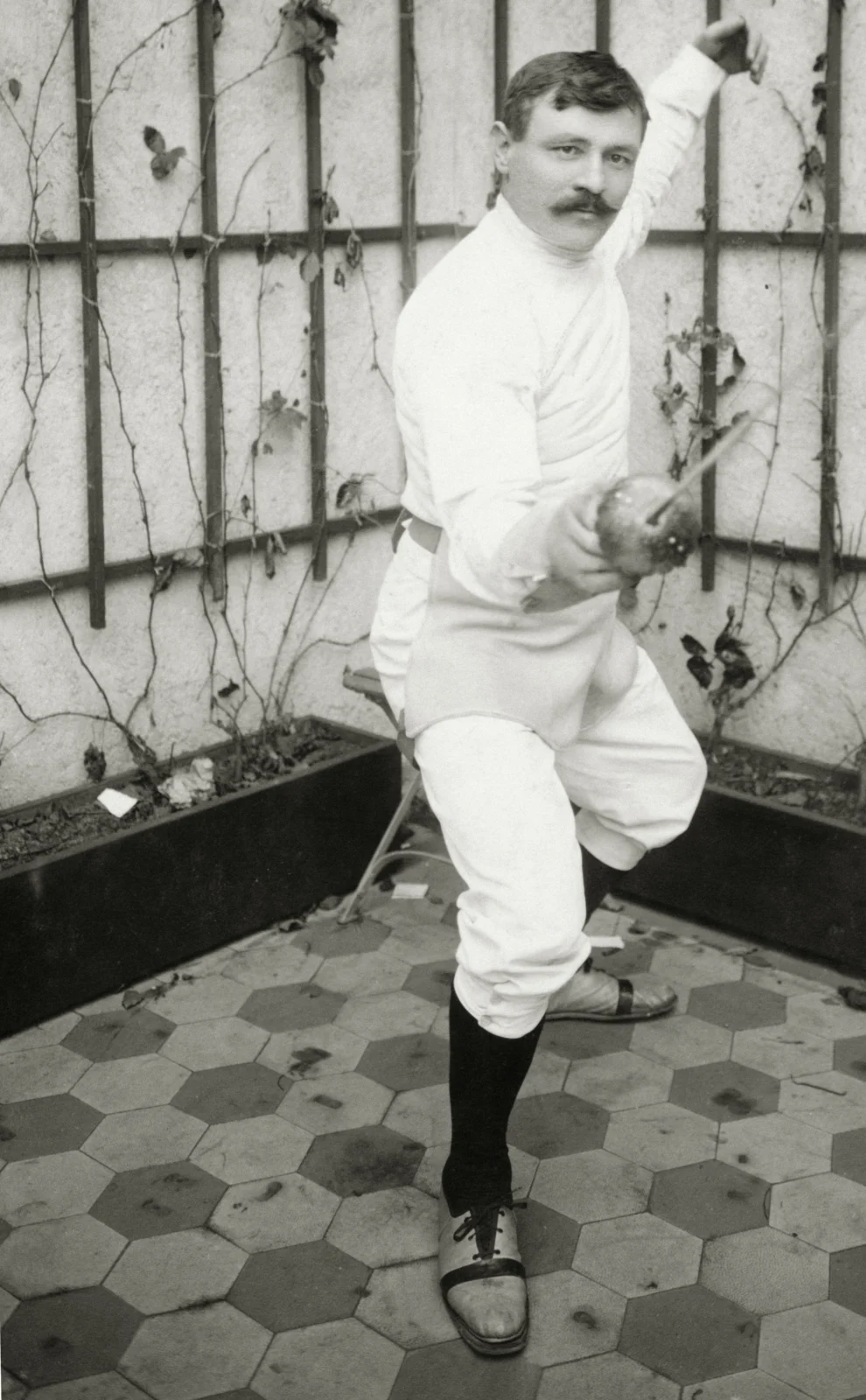
Milan Neralić, Berlin, 1911 (HŠPOM-FT007361)